TODO: https://www.ted.com/talks/matt_walker_a_walk_through_the_stages_of_sleep#t-53295

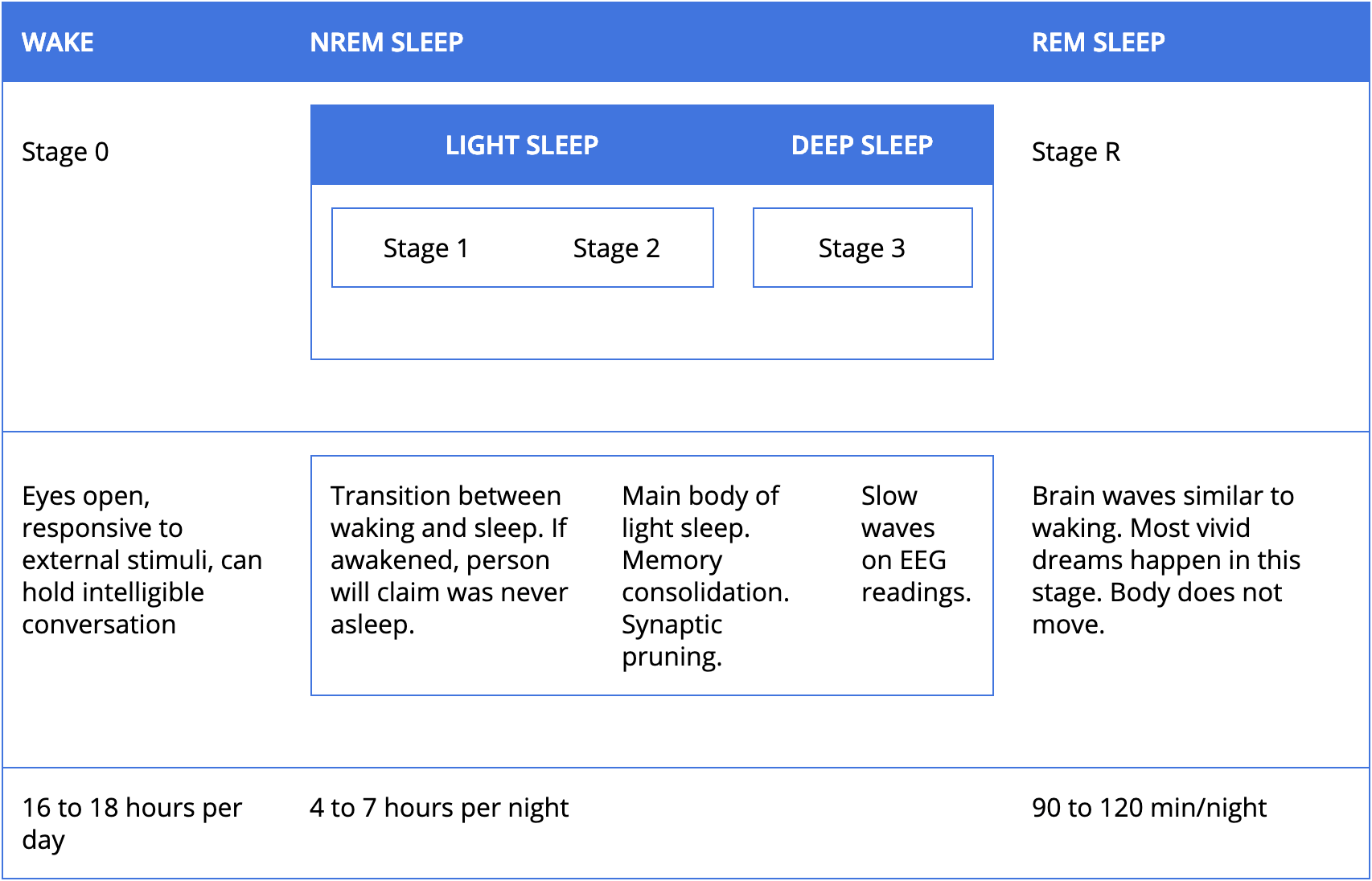
4 Stages of Sleep

  • REM sleep
  • Non-REM (NREM) 1
  • Non-REM (NREM) 2
  • Non-REM (NREM) 3 - Deep Sleep - Slow Wave Sleep

Sleep Stage Progressions

One does not go straight from deep sleep to REM sleep, however. Rather, a sleep cycle progress through the stages of non-REM sleep from light to deep sleep, then reverse back from deep sleep to light sleep, ending with REM sleep before starting over from light to deep sleep again
wake → NREM1 → NREM2 → NREM3 → NREM2 → NREM1 → REM
↑______________________________________↓

Stages of Sleep Detail

Stage of Sleep

Description

NREM Stage 1

  • lightest stage of NREM sleep
  • often defined by the presence of slow eye movements
  • can be easily disrupted causing awakenings or arousals
  • muscle tone relaxes
  • brain wave activity begins to slow
  • people may experience
    • hypnic jerks or abrupt muscle spasms
    • sensation of falling

NREM Stage 2

  • slow moving eyes rolls discontinue
  • awakenings or arousals do not occur as easily as in Stage 2
  • brain waves continue to slow with sleep spindles intermixed with K complexes
    • sleep spindles - specific bursts of rapid brain activity
    • K complexes - sleep structures
  • body temperature begins to decrease
  • heart rate begins to slow

NREM Stage 3

(Deep Sleep)
(Slow Wave Sleep)

  • also known as deep sleep
  • most restorative stage of sleep
  • consists of delta waves or slow waves
  • awakenings or arousals are rare
  • declarative memory is consolidated to long-term memories

REM

  • also known as Rapid Eye Movement
  • dreaming stage
  • brain waves are more active than in NREM stages 2 and 3
  • awakenings and arousals can occur more easily
  • being woken during REM period can leave one feeling groggy or overly sleepy
  • procedural memory is consolidated to long-term memories