biological molecules and compounds are naturally occurring molecules and compounds
macromolecules, big (macro-) molecules made through the joining of smaller subunits
polymers - are long chains made up of repeating molecular subunits or monomers
monomers - are building blocks of polymers
4 Main Types of Biological Monomers
- monosaccharides - forms larger molecules called carbohydrates
- nucleotides - forms larger molecules called nucleic acids
- amino acids - forms larger molecules called proteins or peptides
- glycerol and fatty acids - forms larger molecules called lipids
Sections
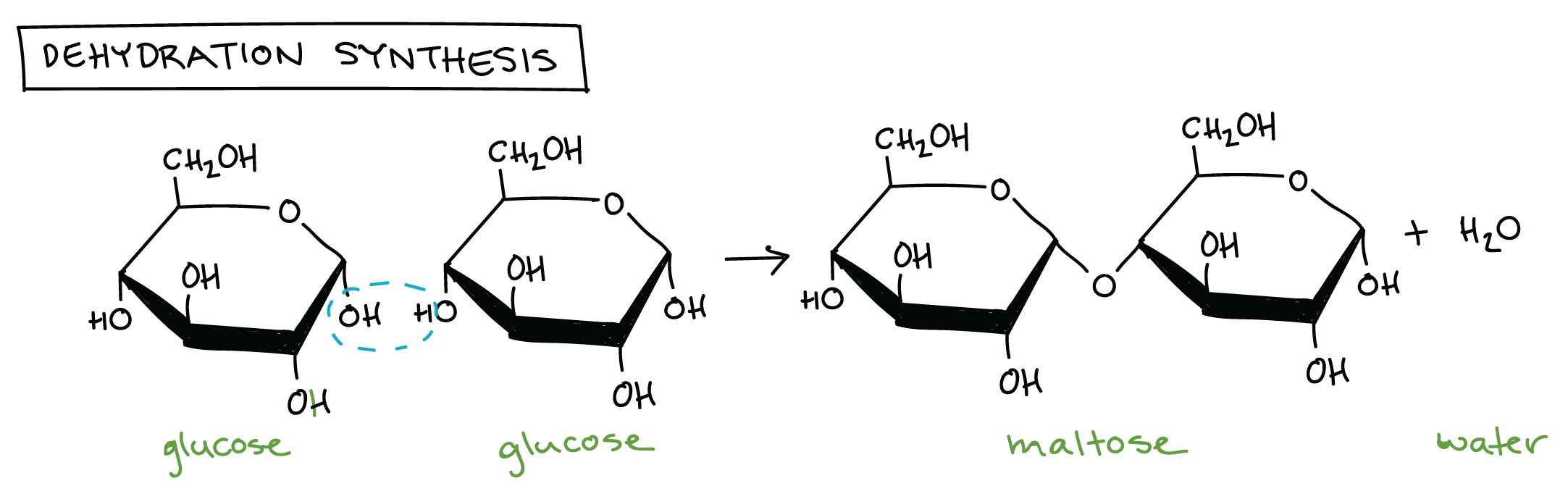
How Polymers are Built From Monomers - Dehydration Synthesis
often via dehydration synthesis reactions - which one monomer forms a covalent bond to another monomer, releasing a water molecule in the process
general form: monomer + monomer → polymer + H2O
monosaccharide form: monosaccharide + monosaccharides → disaccharide + H2O
Example Dehydration Synthesis Reaction
How Polymers are Broken Down to Monomers - Hydrolysis
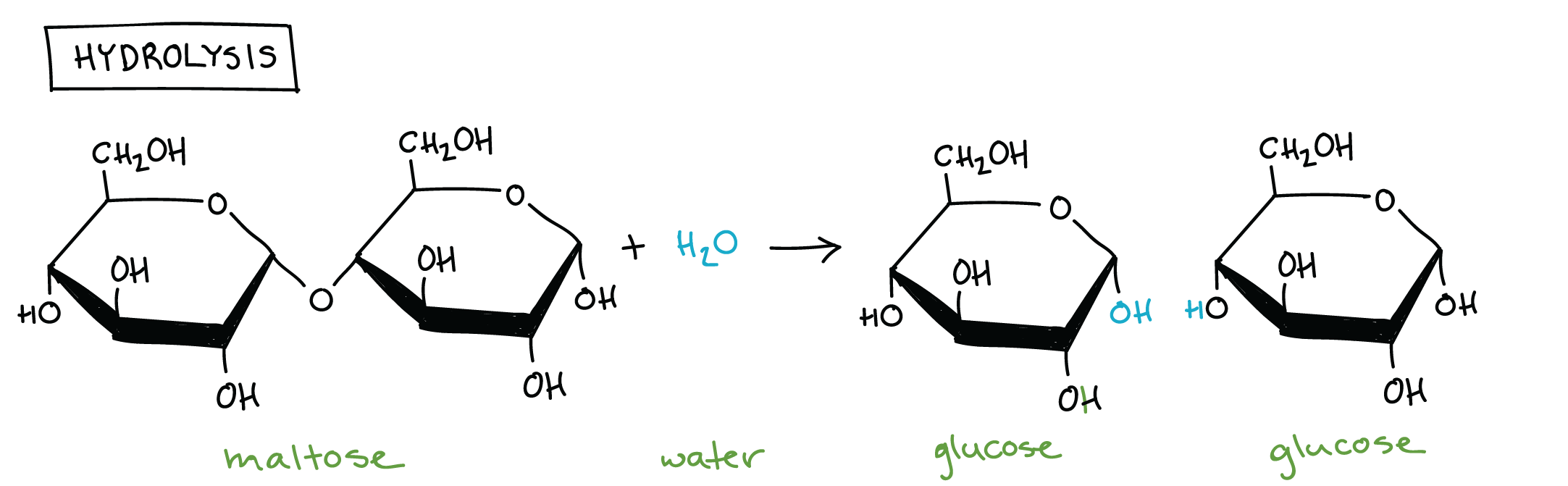
often via hydrolysis reactions - which a bond is broken, or lysed, by addition of a water molecule
general form: polymer + H20 → monomer + monomer
monosaccharide form: disaccharide + H2O → monosaccharide + monosaccharides
Example Hydrolysis Reaction
How to Speed Up Reactions - Enzymes
enzymes catalyze, or speed up, both the dehydration synthesis and hydrolysis reactions
enzymes involved in breaking bonds are often given names that end with -ase
example enzymes:
- maltase enzyme breaks down maltose
- lipases break down lipids
- peptidases break down proteins